



The Importance of Insurance Eligibility Verification in Healthcare Billing
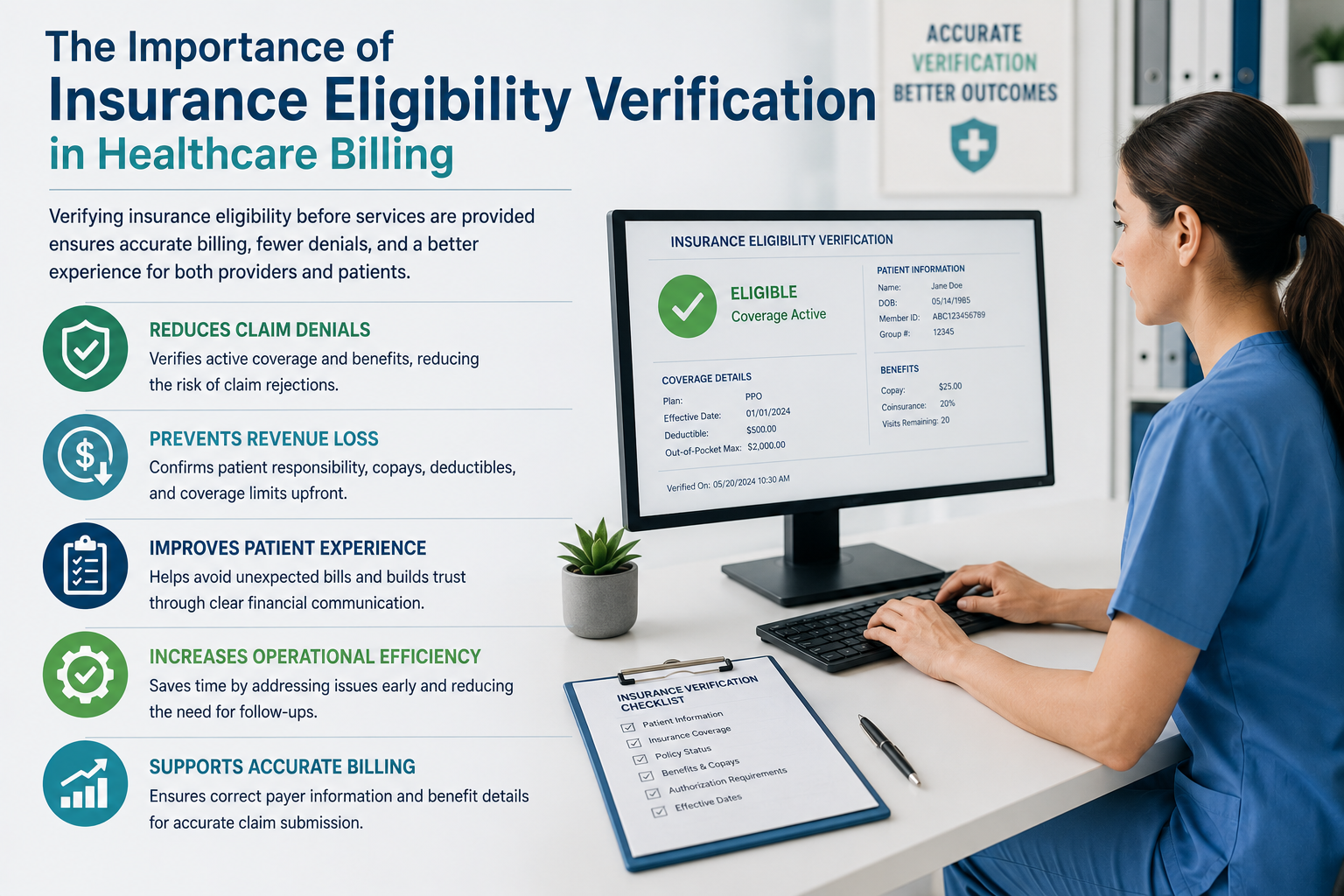
Insurance eligibility verification is one of the most critical steps in the healthcare revenue cycle. Verifying patient insurance coverage before services are provided helps healthcare organizations avoid claim denials, improve patient satisfaction, and maintain a healthy cash flow.
What is Insurance Eligibility Verification?
Insurance eligibility verification is the process of confirming a patient’s insurance coverage, benefits, policy status, co-payments, deductibles, and authorization requirements before treatment is provided.
This process ensures that both the healthcare provider and the patient understand coverage details and potential financial responsibilities.
Why Eligibility Verification Matters
Reduces Claim Denials
One of the leading causes of claim denials is inaccurate or outdated insurance information. Eligibility verification helps identify coverage issues before claims are submitted.
Improves Cash Flow
Accurate insurance verification reduces delays in reimbursement by ensuring claims are submitted correctly the first time.
Enhances Patient Satisfaction
Patients appreciate transparency regarding their insurance benefits, out-of-pocket costs, and financial responsibilities. Clear communication helps build trust and reduces billing disputes.
Minimizes Administrative Burden
Resolving eligibility issues before treatment prevents time-consuming claim corrections and resubmissions later in the revenue cycle.
Supports Compliance
Proper verification helps healthcare organizations comply with payer requirements and reduces the risk of billing errors.
Information Verified During Eligibility Checks
Healthcare providers typically verify:
- Active Insurance Coverage
- Policy Effective Dates
- Co-Payment Requirements
- Deductible Balances
- Co-Insurance Details
- Covered Services
- Referral Requirements
- Prior Authorization Requirements
- Benefit Limitations
Best Practices for Eligibility Verification
Verify Coverage Before Every Visit
Patient insurance information can change frequently. Verification should be completed before each appointment whenever possible.
Use Automated Verification Tools
Technology can streamline the verification process and reduce manual errors.
Train Staff Regularly
Front-office and billing teams should understand payer requirements and verification procedures.
Maintain Accurate Records
Document all verification activities and payer communications for future reference.
Benefits of Outsourcing Eligibility Verification
Many healthcare providers outsource eligibility verification to specialized RCM partners. Outsourcing improves accuracy, reduces staff workload, and helps practices focus on patient care while minimizing claim denials.
Conclusion
Insurance eligibility verification serves as the foundation of an effective revenue cycle. By confirming coverage before services are rendered, healthcare providers can reduce denials, improve collections, enhance patient experiences, and strengthen overall financial performance.



supperadmin
December 11, 2023Finanappreciate your trust greatly Our clients choose dentace ducts because kn ow we are the best area Awaitingare really.